
A Guide to Thinning Paint for Spraying
If you are new to using a paint sprayer then you might not yet have mastered how to thin paint for spraying. With different spray systems and paint types to contend with, there can be a few things to take into account to get the ratios right. This guide explains what is involved when thinning paint for spraying.
In this article, you’ll learn about:
Paint to Thinner Ratios for Spray Guns
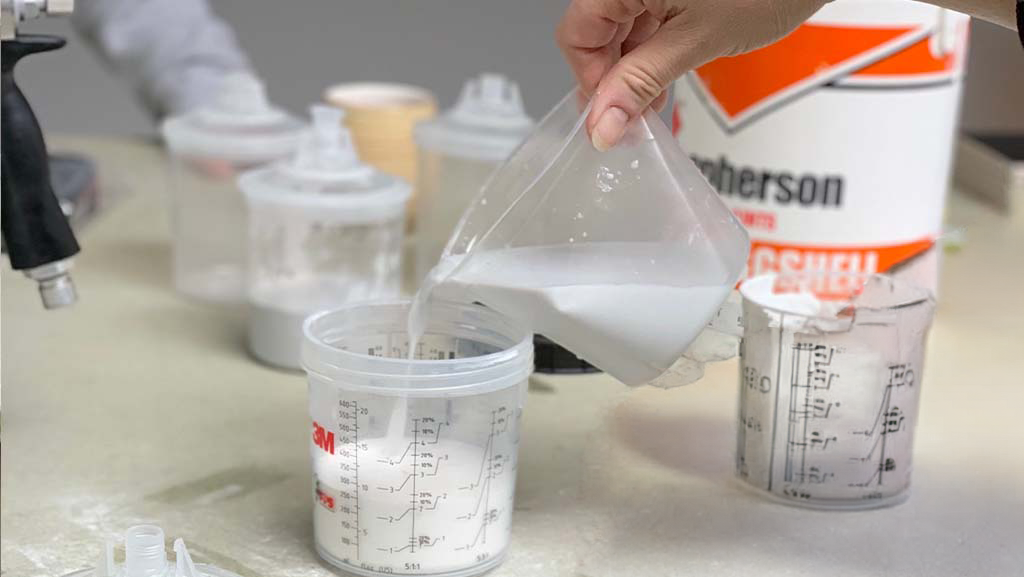
As a general rule, we would always advise that you thin emulsion paints by 10% to 20% before spraying with an airless sprayer. For example, in a 10-litre tub you would add 1 to 2 litres of water. This ratio can vary depending on the brand of paint you are using and the surface you are applying the paint to.
Here are some examples of what this calculation would look like:
| Paint Volume | 10% Water | 20% Water |
| 1 litre | 100 ml | 200 ml |
| 2.5 litres | 250 ml | 500 ml |
| 5 litres | 500 ml | 1 litre |
| 10 litres | 1 litre | 2 litres |
You should add more water when applying emulsion to bare plaster, and you should always check the datasheet that comes from the paint manufacturer to make sure you can use it for spraying.
Look to see if the paint is recommended for spraying and, if so, which types of sprayer should be used. Also, check what the advised paint to thinning ratio is. If the manufacturer only recommends 10% thinning, then you don’t want to exceed this.
We advise students on our paint spraying courses to get in touch with the manufacturers if they aren’t sure about the information on the datasheet. You can phone the technical department of the particular brand and explain to them that you are spraying the paint. They can then give you specific advice for the particular product you are spraying.
Should you thin finish paints?
Finish paints for woodwork are typically water-based satin and do not usually need to be thinned at all when using an airless sprayer. Always start by spraying a woodwork paint without thinning it, if it struggles to spray then look at the tip size and pressure before thinning.
An airless sprayer will spray neat water-based satin easily, with any thinning potentially causing problems such as loss of sheen or runs. So, as a simple rule of thumb, any paint being applied to woodwork by an airless sprayer should not be thinned.
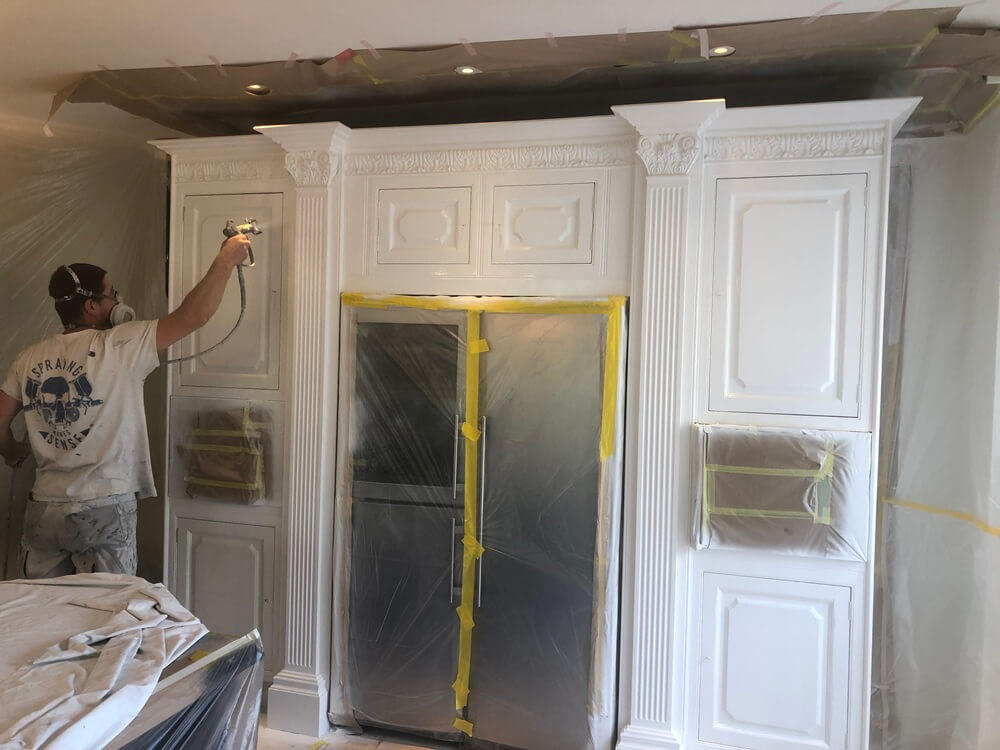
Most decorative paints are designed to be brushed and rolled, so whilst an airless sprayer can manage well with them, you will need to know how to thin paint for spraying with a HVLP system.
Download Now: The Ultimate Guide To Spraying [Free Template]
How to Thin Paint for Spraying
The exact method for thinning paint for spraying depends on the type of paint and the sprayer you’re using but here’s a general guide:
- Gather basic supplies, such as paint, thinner (water for latex, mineral spirits for oil-based), a stir stick or mixing drill, and a bucket.
- Mix the paint and the thinner using the ratios outlined above
- Test the thickness by doing a flow test. Dip a stir stick in the paint and lift it out – the paint should flow smoothly in a thin stream, not drip
- Use a paint strainer or a pair of tights to remove any clumps or debris that might clog the sprayer
- Test the mixture by spraying on cardboard or paper first. If the spray is sputtering or uneven, it’s too thick. If it’s running or dripping, it’s too thin. Adjust by adding more paint or thinner as needed
Types Of Spray Systems
To understand thinning paint for sprayer applications, it’s important to know the difference between the two main types of sprayer.
Airless Sprayers
Airless sprayers are very powerful and typically spray paint at around 2000 psi. There is no air involved, and the paint is pumped under pressure through a tiny hole which turns the paint into a mist.
Best paints for airless sprayers
Airless spray systems work well with almost all paint and are suited to large surface areas, hence why they are used for walls and ceilings.
Advantages of airless sprayers
- Can spray most paints without thinning
- Preserve the quality of the paint since excessive thinning isn’t required
It is worth noting that although airless sprayers can spray most paints without excessive thinning, the type and brand of paint will influence how the paint behaves. We would always tell you to read the manufacturer’s instructions to achieve best results and avoid mistakes.
HVLP (High Volume Low Pressure) Sprayers
HVLP sprayers operate at around 10 psi, which is a much lower pressure, making them slower than airless systems. The pressure is provided by a small turbine that sucks air in from the room and compresses it. The compressed air is not stored and is sent directly to the gun.
Best paints for HVLP sprayers
HVLP systems are more often used for finer results and decorative finishes. Not all decorative paints work well with HVLP systems and even with significant thinning, some paints will not spray properly. Here are our tips for success:
- Look for spray-formulated or thin-bodied paints
- Always test before committing to large-scale spraying
- Try to thin as little as necessary as less thinning usually means better results
There are many decorative paints out there, with different types of paint and various brands to choose from. Whether using emulsions and eggshells, or primers, undercoats, satins and glosses, the guidelines above apply in most cases. However, it is always worth doing a little extra preparation if you are using a paint type or brand for the first time.
Advantages of HVLP sprayers
- Best suited for smaller jobs and detailed work
- Typically used for spraying woodwork finishes
Need More Advice?
This should have adequately covered the general rules for knowing how to thin paint for spraying. To sum things up:
- Thinning paint for spraying depends on the type of sprayer and paint you’re using
- Airless sprayers can often spray paint with minimal or no thinning
- Emulsion should be thinned by at least 10% if spraying with an airless sprayer
- HVLP sprayers need thinner paints and may require up to 20% thinning
- Always follow manufacturer guidelines for best results
- Taking the time to prepare your paint properly will ensure a smooth, professional finish every time
Discover why spraying is the future of painting and decorating, and learn how to advance your skills and correctly spray any paint onto any surface with a Paint Tech training course delivered by trade professionals. From the fundamentals of airless spraying to using HVLP systems, we have courses covering every topic. Talk to us about CITB funding and what our courses offer, or book your next course now.


